Why PRT Alone is Not Enough
If I were to encapsulate the past year of my therapy work into a single phrase it would be:
Transforming Relationships to Pain
2025 was a year that reframed my understanding of chronic pain and treatment as a practitioner in New York City. Both professionally and personally, I explored the use of Pain Reprocessing Therapy (PRT) informed techniques to help transform my clients’, and my own, relationship to physical pain. My experience of working with transgender (or trans) clients has shown me that PRT alone is often insufficient in treating chronic pain when it is compounded by complex trauma and triggering environmental stimuli . My aim for 2026 is to continue to integrate key tenets of PRT as part of a multi-dimensional therapeutic approach to more effectively address chronic pain management for my clients.
PRT functions on the understanding that chronic pain = sensation + fear
What is Pain Reprocessing Therapy?
Pain is a danger signal that both triggers, and is triggered by, fear. People often get stuck in the “pain-fear” cycle, where experiencing pain triggers a higher sense of danger, a higher sense of danger triggers more fear, more fear triggers more danger, and more danger triggers more pain.
After we get stuck in this cycle for long enough, our brain starts to repeatedly misinterpret neutral sensations through the lens of danger, and we can develop chronic pain. We can’t control the physical sensations in our bodies, but by lowering our level of fear, we can decrease our overall pain. This allows us to develop a new relationship to pain as something that isn’t inherently dangerous.
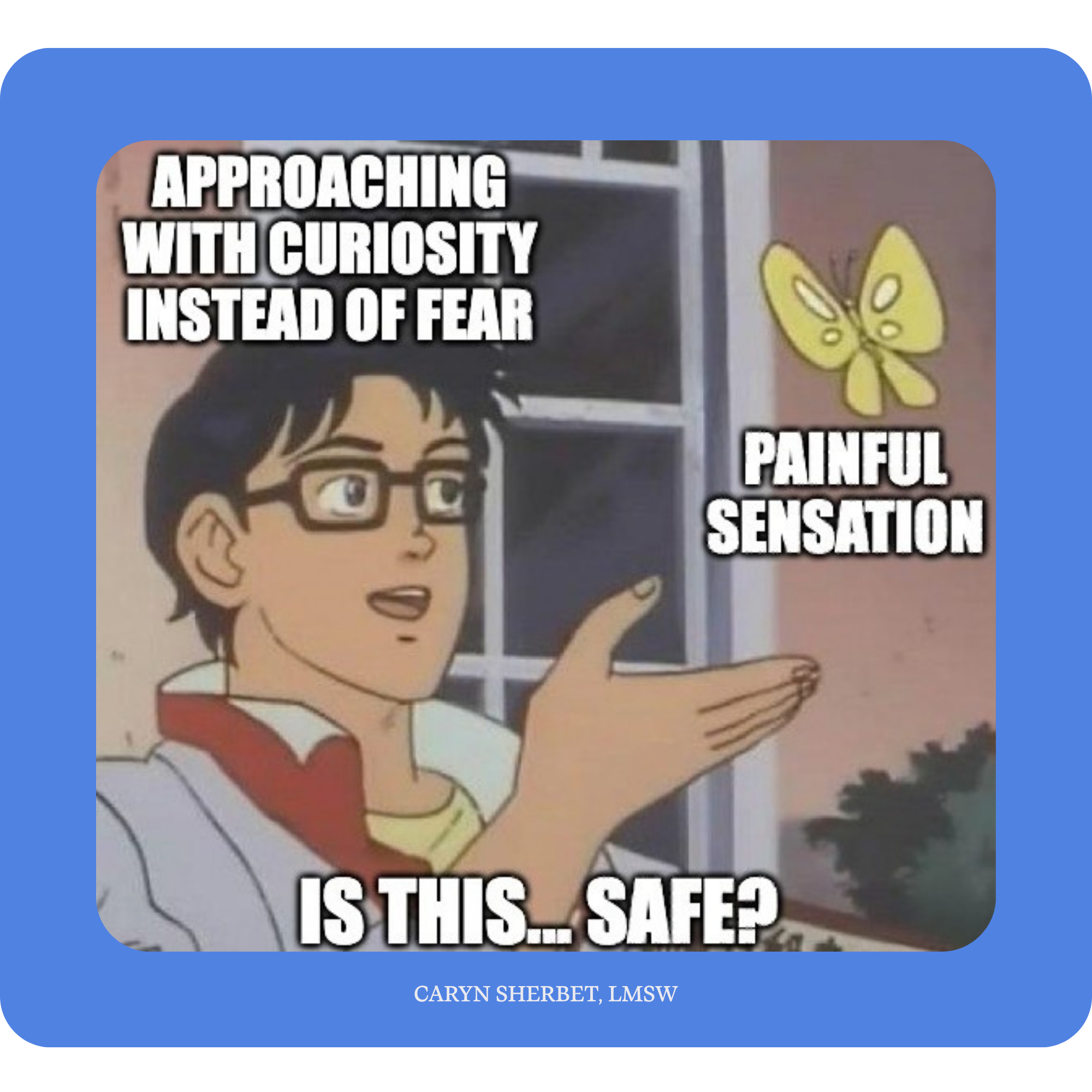
One of the main mechanisms of PRT is called somatic tracking, which is basically exposure therapy to the physical sensations in one’s body. Here, the client focuses on the painful sensation and tries to approach it with curiosity instead of fear, all while the therapist tells them repeatedly that those sensations are “safe”.
My own journey with chronic pain and illness
In the past year, I personally have been coming to grips with the mind-body connection through PRT and my own experience of chronic pain/illness. Seeing the effect of psychoneuroimmunology in real time has been illuminating and, often, filled with grief. My own chronic pain/illness came to a head in ways I could no longer ignore during a particularly stressful time in my life. Though PRT has helped me manage my symptoms immensely, my pain and illness flares are often still connected to things like bad moments of burn out or interpersonal conflict. My own PRT therapist once said that dealing with chronic pain and illness is actually just dealing with chronic grief; paradoxically, the more I’m able to tap into my emotional pain, the easier my physical pain becomes.
I also see the effect of psychoneuroimmunology within my most immediate communities – every trans person I know in Brooklyn experiences frequent bouts of physical illness, presumably due to the combination of chronic stress and the increased prevalence of illnesses like COVID-19. I felt a desire both for myself and my community to explore more effective and dynamic ways of managing pain for trans people who experience higher rates of anxiety, depression, and trauma–all things that keep our body’s danger system on high alert and can lead to increased levels of chronic pain and illness.
The evolution of my PRT implementation
I was immediately a PRT disciple, as it had significantly decreased my own debilitating chronic pain and completely transformed my relationship to pain as a whole. But as I continued to use PRT with my trans clients, I noticed it became increasingly difficult to tell my clients they were “safe” and truly mean it. Which brought me to the question of: how do I help my clients find a sense of safety in the world where safety isn’t promised?
Why PRT alone isn’t enough for some clients
I ultimately came to the understanding that while PRT is a great modality, it often isn’t sufficient to address the needs of trans clients, particularly those with complex trauma, alone. Part of working with physical pain is attending to deep emotional childhood pain that perpetuates the body’s sense of danger; helping someone’s wounded child parts feel heard and cared for by more adult parts can create a profound sense of safety and trust in one’s self. Even when there is significant terror and uncertainty in the world around us, learning to tend to our own wounds and vulnerability can be incredibly powerful.
Treatment of pain deserves a multi-dimensional approach
Unlinking the connection of fear with pain and instead reinforcing the feeling of safety is a tool that clients take from our therapy work and then implement into their everyday lives. When those everyday experiences include instances of transphobia - including threats to physical safety and legal protections - the fear-pain connection needs to be addressed with more nuanced modalities. The biggest shift for me was developing a multi-dimensional approach to pain management that also incorporates a broader range of therapies, including Exposure and Response Prevention (ERP), Internal Family Systems (IFS), and psychodynamic therapy that addresses underlying responses to pain. With this “therapeutic quilt” of informed approaches, I can best address the unique needs and specific experiences of my clients with complex trauma as they pursue chronic pain management.
Let’s Connect!
If you are interested in exploring how PRT-informed psychotherapy can be part of your pain management experience - reach out to me so we can talk more about your journey with pain.

My name is Caryn Sherbet (they/them) and I am a licensed psychotherapist based in Brooklyn, New York.
My boundary-expansive approach empowers my clients in overcoming challenges and embracing “otherness”.
I offer unique expertise in treating many conditions of the human experience, including:
OCD, anxiety, and/or rumination
Chronic illness and/or pain
LGBTQ+ Identity
Understanding relationship patterns and/or conflict
Sexual “dysfunction” and associated experiences
Self-conceptualization, meaning-making, and finding purpose
Read more about