What The Hell is Differentiation and Why is it Crucial for Good Couples Therapy?
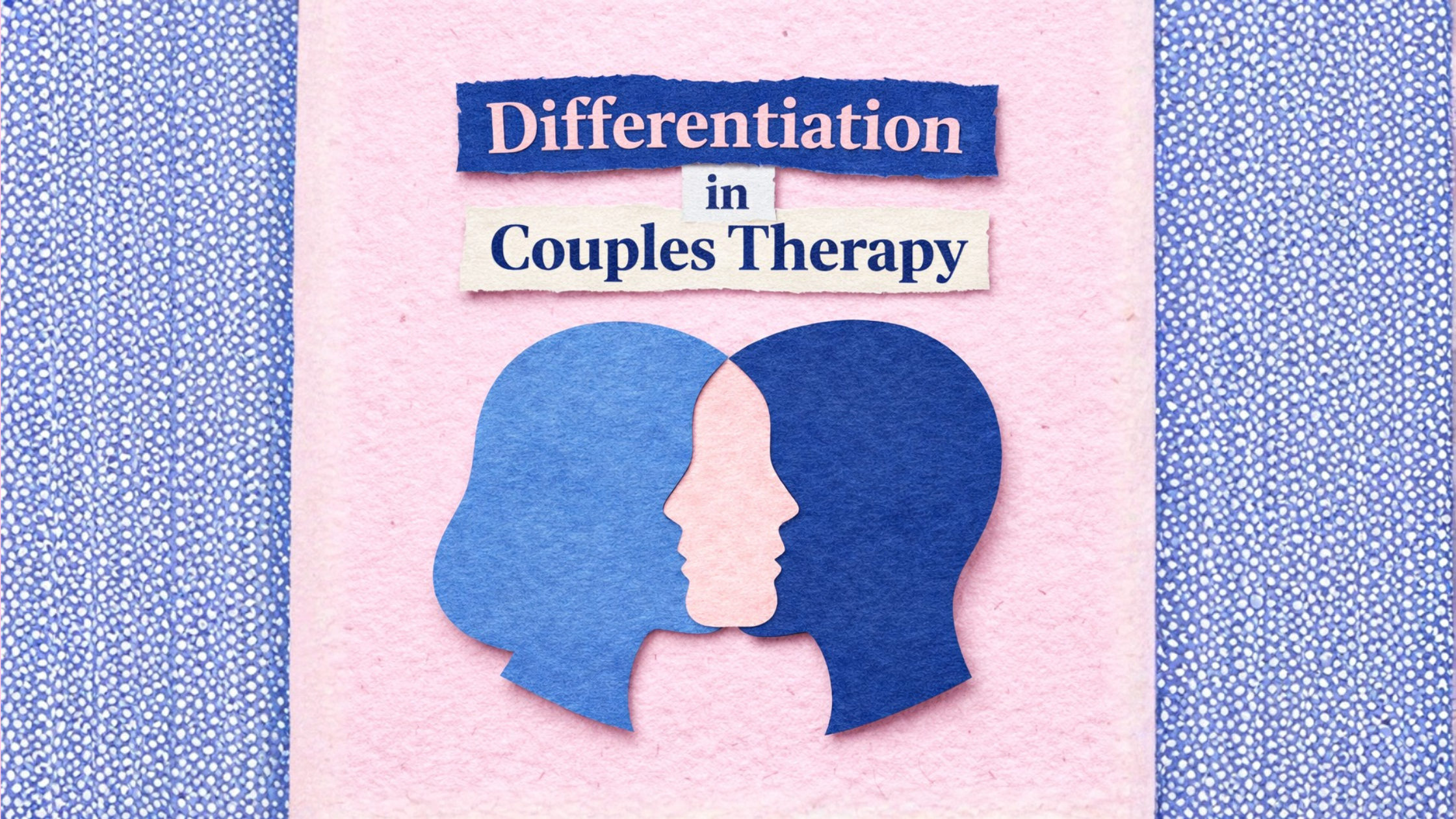
If you’ve ever found yourself repeating the same patterns in every relationship no matter how hard you try to do something different… this one’s for you.
By this point, many of us are familiar with pop psychology that runs rampant regarding romantic relationships. Maybe you’ve figured out that you have an anxious or avoidant attachment style, maybe you’re wondering whether you and your partner are codependent, or maybe you want to know whether that weird thing your partner does is a beige flag or a red one. While these can be semi-useful pieces of knowledge for understanding relationships, they don’t really get at what’s happening big picture in a romantic relationship, nor do they provide any kind of framework for creating change. Enter: differentiation.
What is Differentiation?
Differentiation can be loosely defined as holding onto yourself while someone comes really close or moves far away emotionally. It’s a mildly ambiguous definition that’s better understood through example: When your partner pulls away, are you able to let them have space or do you chase after them? When your partner does something differently than you might do it, do you let them be or do you try to get them to do things your way? When your partner wants to be emotionally vulnerable with you, are you able to connect with them or do you avoid talking with them? When you think your partner is upset with you, do you avoid contact with them? Do things to try to please them? Or just ask whether they’re upset and if you can talk about it?
Your ability to tolerate distress associated with your partner’s emotional closeness or distance correlates to your level of differentiation–low levels of distress tolerance means low levels of differentiation. The ability to tolerate this distress often hinges from the source of your self-worth and assuredness; the more you can derive your self-worth and assuredness from yourself, and not from your partner, the greater your ability to tolerate your partner’s emotional comings and goings. And the ability to self-source your self-worth and assuredness usually comes from, you guessed it, your family of origin.
People generally tend to come into adulthood at the highest level of differentiation achieved by their parents–things like strict familial roles, low tolerance for emotional needs, or minimal emotional boundaries with parents point toward low differentiation (also called emotional fusion). Emotional fusion is the idea that the fundamental separateness or difference between partners, or parents and their children, is a threat that must be avoided at all costs.
Your ability to tolerate distress associated with your partner’s emotional closeness or distance correlates to your level of differentiation.
How Does Differentiation Show Up in Couples Therapy?
Ok ok but what does this have to do with couples’ therapy? There is an overwhelmingly common misconception that the secret to happy relationships is pursuing more sameness–this is not true. I first encountered the concept of differentiation in Dr. David Schnarch’s Passionate Marriage, wherein Schnarch asserts the paradox that difference and separation between partners is actually the thing that facilitates more closeness, connection, and intimacy. This idea is echoed throughout Esther Perel’s Mating in Captivity, which explains the inverse relationship between excitement, novelty, and difference vs. comfort, stability, and sameness. Learning to be different from your partner, and learning to tolerate their difference from you, actually brings you closer. It’s the difference between interdependence and codependence; you enjoy and value your partner’s validation of who you are but you don’t need it to survive.
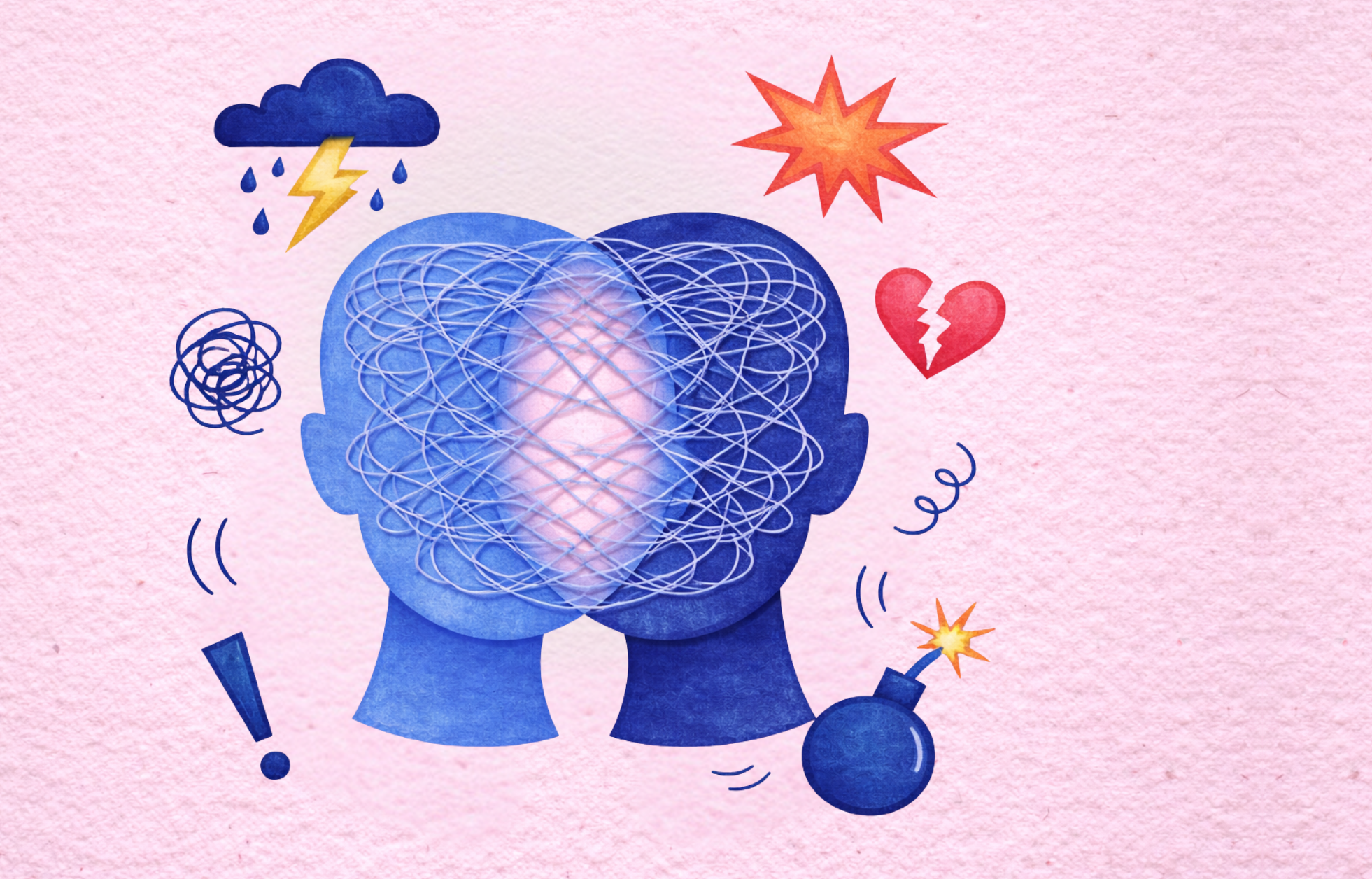
Emotional Fusion
An unhealthy blurring of boundaries where individuals become enmeshed, losing their sense of self in a partner's or family member’s emotions.
Helping Couples Grow from Conflict
Many approaches to couples’ therapy quietly discourage conflict by moving partners toward more sameness. But conflict is where the growth happens! Many of us are terrified of conflict because of our childhood associations to it, wherein conflict with a parent symbolized an existential threat to our safety. But as adults, we cannot actually be abandoned (only left) or consumed (only crowded) by a partner, making conflict not only “safe,” but deeply necessary for our growth as people. It’s only through “getting a hold of ourselves,” aka simultaneously and repeatedly self-confronting and self-soothing, that we can become more separate from, and therefore more intimate with, the people we love.
The differentiation model encourages agency, individuality, and autonomy between partners without sacrificing compassion or connection. If you’re unhappy in your relationship, you likely don’t need to find a new partner, you need to differentiate from your current one. If you’re struggling in your relationship and need help self-confronting, self-soothing, and/or differentiating, please reach out. I’d love to help you and your partner become more different, together.
Reach out for support!
If you or your partner are needing support in managing levels of differentiation, I am always happy to connect with you and talk more about how therapy can help you in your journey.
If

My name is Caryn Sherbet (they/them) and I am a licensed psychotherapist based in Brooklyn, New York.
My boundary-expansive approach empowers my clients in overcoming challenges and embracing “otherness”.
I offer unique expertise in treating many conditions of the human experience, including:
OCD, anxiety, and/or rumination
Chronic illness and/or pain
LGBTQ+ Identity
Understanding relationship patterns and/or conflict
Sexual “dysfunction” and associated experiences
Self-conceptualization, meaning-making, and finding purpose
Read more about




The information in this blog is for educational purposes only and is not intended to be a substitute for professional mental health advice, diagnosis, or treatment.
Interaction with this blog, including comments or messages, does not constitute a therapist-client relationship. If you are in crisis, please call 911, go to the nearest hospital emergency room, or call a crisis hotline (988) immediately.