Sexual Trauma is a Spectrum
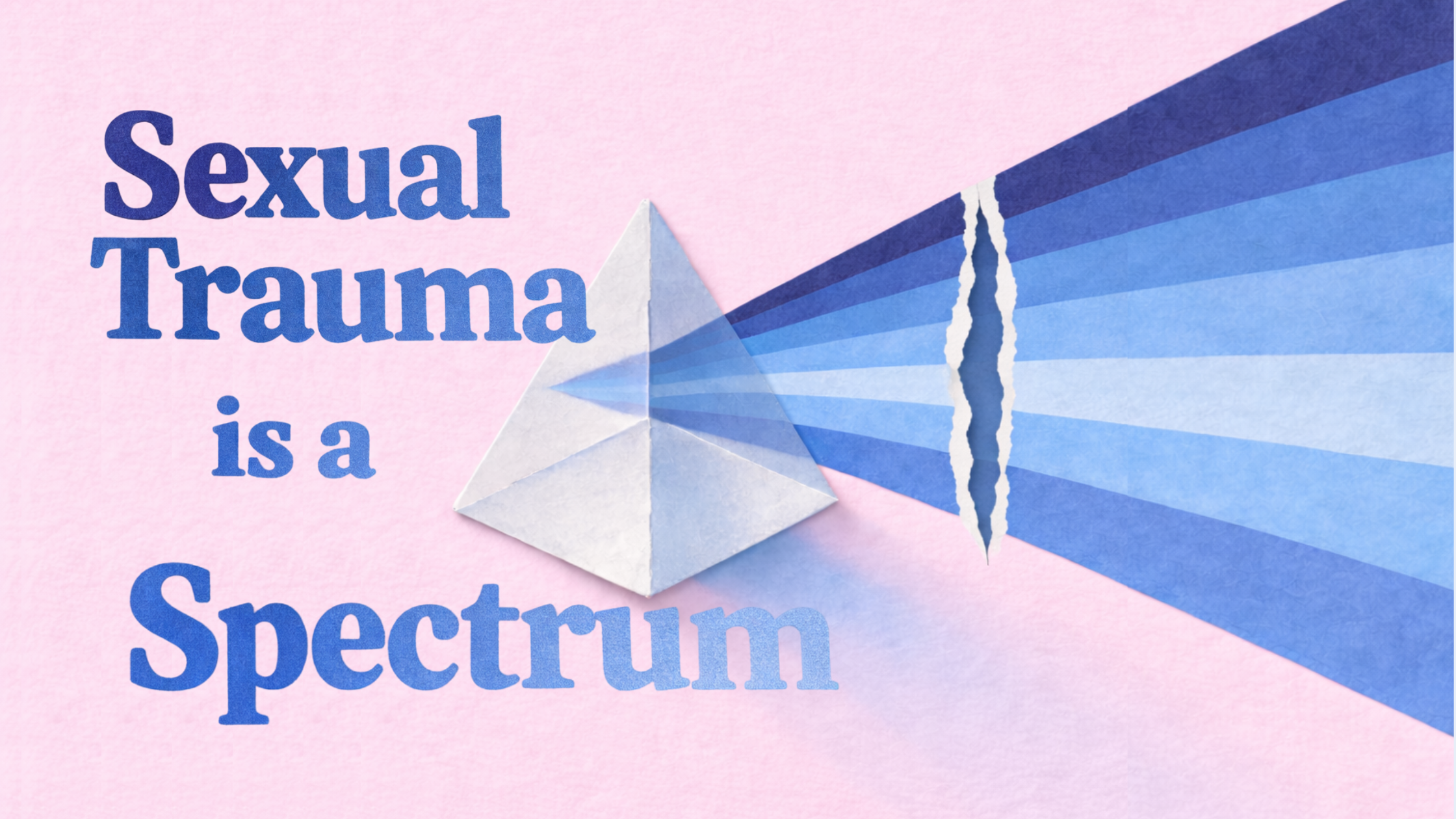
For those of us who grew up in the U.S., we have been raised within a deeply unempathetic culture when it comes to trauma, particularly to sexual trauma. Sexual trauma is pervasive at every level of American culture; tracing back to the horrific beginnings of this “country,” sexual violence was routinely used as a method to subjugate Indigenous and enslaved Black folks under colonial rule. Any culture built on this legacy will never be able to appropriately understand, let alone treat with any gravitas, the true scope of what constitutes sexual trauma. In my clinical work, understanding sexual trauma from both a spectrum and hierarchy perspective allows me to help clients look at their experiences more holistically and heal from them more fully.
Trauma is less about the material facts of what someone has experienced and more about what the body internalized from that experience.
Broadening the Scope of How We Define Sexual Trauma
Image based on informational graphic by University of Alberta Sexual Assault Centre
Trauma as it relates to sex goes beyond what we typically think of as “sexual trauma.” Trauma is defined by the APA as “any disturbing experience that results in significant fear, helplessness, dissociation, confusion, or other disruptive feelings intense enough to have a long-lasting negative effect on a person’s attitudes, behavior, and other aspects of functioning.” This definition of trauma in combination with the Pyramid of Sexual Violence allows us to understand how sexual trauma can stem from a variety of experiences, ranging from acute sexual violence (i.e. rape, sexual assault, child sexual abuse) to systemic oppression and beliefs about sex (i.e. internalized or externalized misogyny, racism, ableism, transphobia, etc.). In addition, many folks also hold non-sexual trauma that affects their sex lives (i.e. physical abuse, emotional abuse, accident or injury), and/or may have trauma-related chronic pain that affects their ability to engage with their sexuality. And of course, many (most, if not all) folks have some combination of all of the above.
Culture as Proliferator of (Usually Harmful) Ideas About Sexuality
Something that conventional understandings of sexual trauma fail to account for is the effect of cultural messaging about sex in American culture. I’ve met with countless clients who tell me that they have no “real” sexual trauma to speak of, yet are terrified to take their clothes off, masturbate, or ask for what they want in bed because of ongoing messages from the environment in which they were raised. The definition above notes that trauma is considered trauma when it has “a long-lasting negative effect on a person’s attitudes, behavior, and other aspects of functioning.” Being unable to orgasm with a partner because you’re terrified that God will smite you for it; believing that you’re “too fat to have sex;” engaging in sex when you don’t actually want to because you believe it’s the “normal thing to do” all sound like trauma to me!
Trauma can be particularly hard for folks to identify as such especially when it’s systemic, or repeated/ongoing. Particularly for those who have grown up in a puritanical, misogynistic, racist, or otherwise hostile culture around sex, it can be especially hard to unplug from the cultural matrix and recognize these beliefs as just opinions, not facts.
Many folks will come to believe that whatever they experienced “wasn’t bad enough” to constitute being “trauma.” I cannot stress enough how untrue this is! Trauma is less about the material facts of what someone has experienced and more about what the body internalized from that experience.
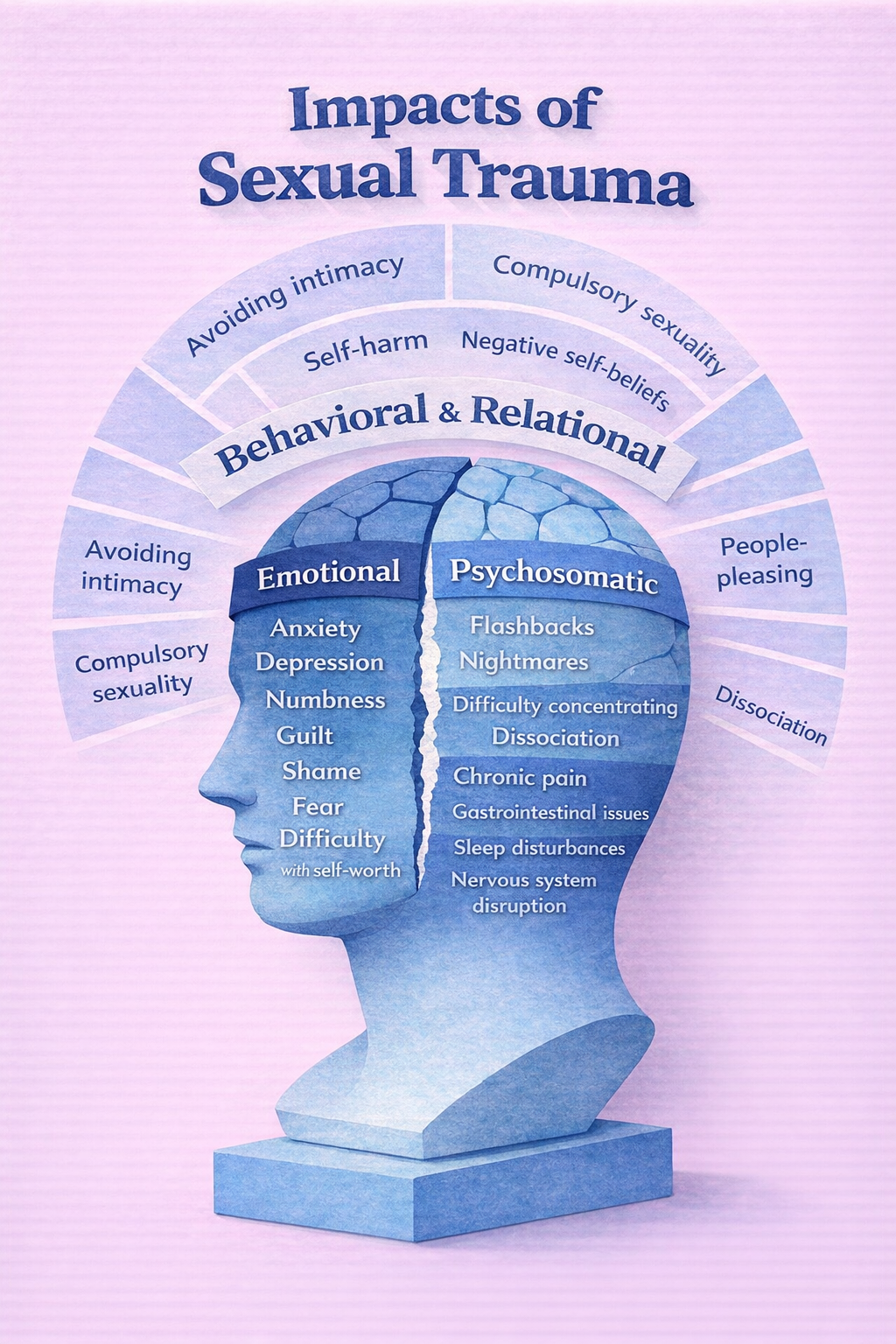
Image is meant for artistic representation and not a literal representation of sexual trauma in the brain.
A Spectrum of Experiences Means a Spectrum of Impacts
Unaddressed sexual trauma can manifest in a variety of stressful ways, both during sex itself and in one’s daily life, including:
Emotional: Anxiety, depression, numbness, guilt, shame, fear, difficulty with self-worth
Psychosomatic: Flashbacks, nightmares, difficulty concentrating, , dissociation, chronic pain (during sex or otherwise), gastrointestinal issues, sleep disturbances, nervous system disruption
Behavioral & Relational: Avoiding intimacy (sexual or otherwise), engaging in compulsory sexuality, continually choosing sexual partners who reinforce negative self-beliefs, “people-pleasing” (aka not self-advocating in sex and relationships)
Just because someone’s sex-related trauma isn’t rooted in acute sexual violence doesn’t mean it isn’t distressing or doesn’t deserve being addressed. Sexual trauma can create a wide range of harmful effects and each deserves, if not therapeutic treatment, then at least our compassionate attention.
How I Show Up for My Clients
Given the insidious nature of America’s culture of casual sexual violence, I approach therapy regarding sexual trauma with an expansive lens that provides a sense of safety, understanding, and relief. I instead focus on validating experiences and needs of my clients without placing blame or judgement on behaviors, choices or thought patterns. Acknowledging the client’s experience as traumatic is super important, even (especially) when having to acknowledge the scope of harm is difficult/triggering/filled with grief in and of itself. Once we can name how trauma manifests as part of a client’s sexual experiences, only then can we make progress in treating the corresponding effects and building a fulfilling, trauma-informed sex life.
If you are someone with any range of negative sexual experiences that are still impacting your mental, physical and sexual well-being - please don’t wait to seek support. It doesn’t matter that it“could have been worse.” It can always be worse. That doesn’t mean it’s not deserving of professional attention. You deserve access to therapeutic resources that allow you to make the personal progress you need to thrive.
Reach out for support!
If you are needing support in understanding and coping with the impacts of sexual trauma, I am always happy to connect with you and talk more about how therapy can help you in your journey.
If
My name is Caryn Sherbet (they/them) and I am a licensed psychotherapist based in Brooklyn, New York.
My boundary-expansive approach empowers my clients in overcoming challenges and embracing “otherness”.
I offer unique expertise in treating many conditions of the human experience, including:
OCD, anxiety, and/or rumination
Chronic illness and/or pain
LGBTQ+ Identity
Understanding relationship patterns and/or conflict
Sexual “dysfunction” and associated experiences
Self-conceptualization, meaning-making, and finding purpose
Read more about






The information in this blog is for educational purposes only and is not intended to be a substitute for professional mental health advice, diagnosis, or treatment.
Interaction with this blog, including comments or messages, does not constitute a therapist-client relationship. If you are in crisis, please call 911, go to the nearest hospital emergency room, or call a crisis hotline (988) immediately.